
Beware Overfitting
I ran two sessions of pickling class on Saturday. It was a lot of fun. The morning group consisted of women who also quilt and sew, so they got a tour of my sewing room(s). One of the students in the afternoon class was a young woman who grew up in the town just east of where I grew up in Ohio. (She is from Westlake, I am from Avon.) That was a fun coincidence. She is also taking the mending class I am giving tomorrow evening at the Community Center.
By yesterday afternoon, I just needed to make something, so I made a muslin for the Grainline Willow Tank:
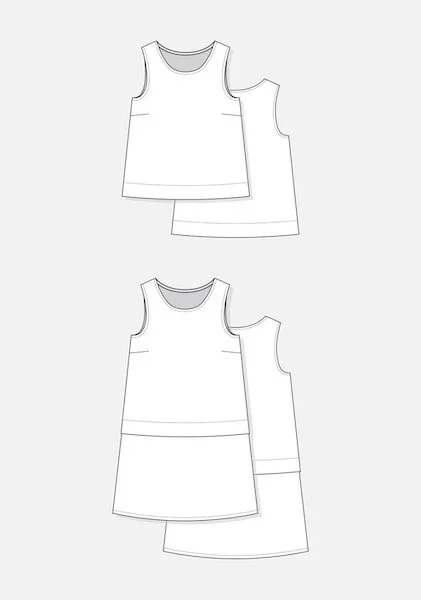
I like this very much, although the sizing on these Grainline patterns is generous, at least in the D-cup size range. If I make the size indicated by comparing my measurements to the size chart, the garment is too big. I always have to go down one size. The muslin fit well, though, and I like the way it looks. (I am wishing I had made some of these tanks earlier in the summer, because they also would have been in heavy rotation.) I am going to incorporate the rounded chest alteration that I mentioned in the previous blog post, just to see if it makes any kind of difference. I am beginning to suspect that that is one of the standard alterations I’ll need to make going forward, much like always having to lengthen patterns by 2-3". I’ll run up a second quick muslin today—I have leftover chunks of fabric from other projects and this top doesn’t require much—to see what I think.
The process of fitting comes with the temptation to overfit in an effort to eliminate all wrinkles and drag lines completely. That’s an unattainable goal, and an undesirable goal as well. And overfitted garment doesn’t allow for much movement. We don’t demand perfectly fitting clothing in our ready-to-wear garments—and believe me, I look at people’s clothing and the way it fits every time I am out in public—so I wonder why we strive for that in our me-mades? There is a middle ground where clothing fits well but may still have the occasional wrinkle or drag line, and that’s okay.
My big thing is bust darts. I have seen so many garments on models where the bust darts are clearly in the wrong place. Most of the time, they are too high. The rule I use is that if I extend the line of the dart at the same angle from where it ends on the garment, that line should extend through the apex of the bust. I understand that the fit model may not be the person for whom the garment was made, but still, a well-placed bust dart is the one feature that tells me the sewist knows what he or she is doing when it comes to fitting. And altering the position of a bust dart is not difficult.
*****
I have some breathing room before the next big event, so I am hoping to get a lot accomplished this week. (I’m whispering so the universe doesn’t hear me and upend my plans.) I need to start getting my class materials together for my classes at Quilting Mayhem in Snohomish, WA. And I need to make a couple of batches of zucchini bread. ‘Tis the season.