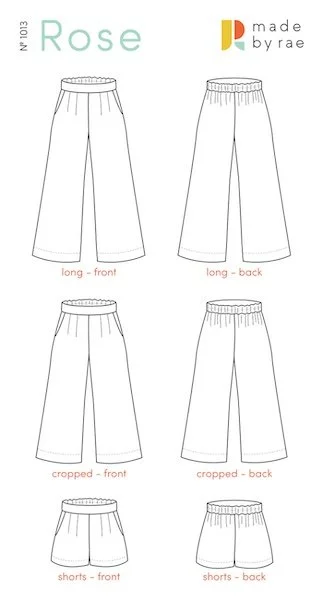
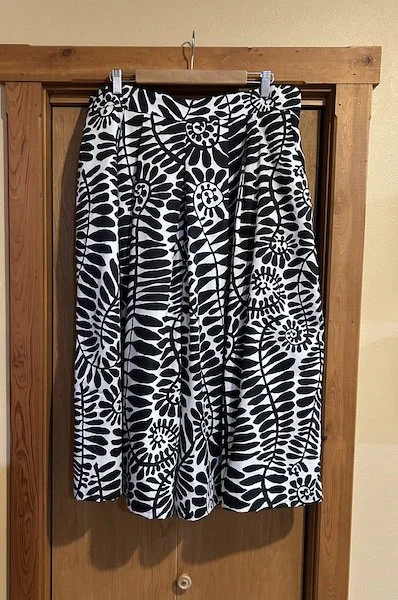
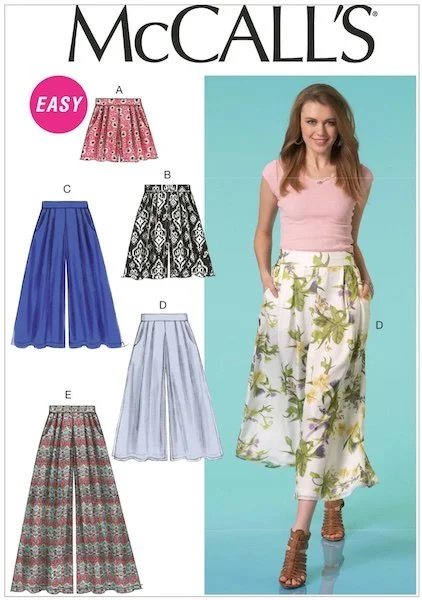
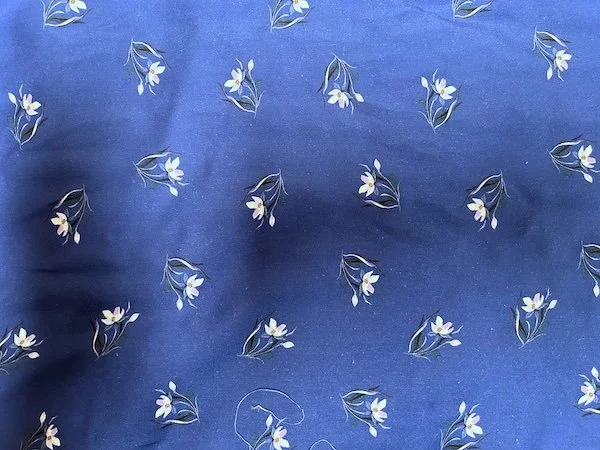
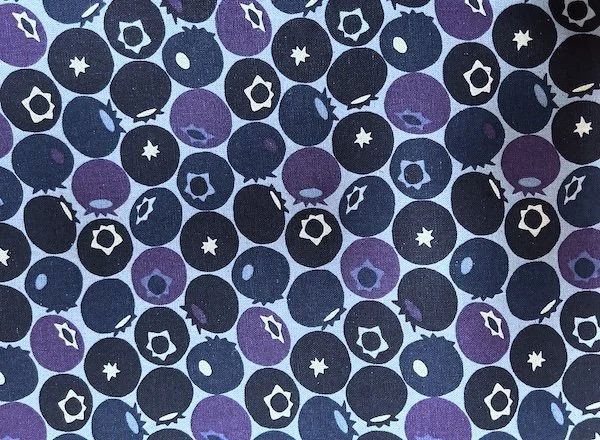
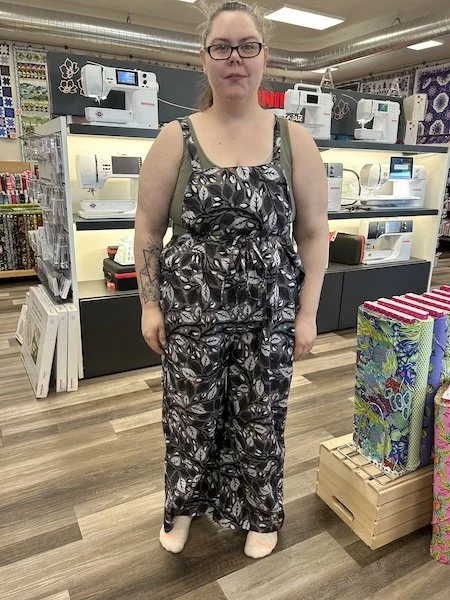
They don’t look like much hanging on the hanger, but I like them a lot. This pattern is going into the tried-and-true pile, with some minor modifications.
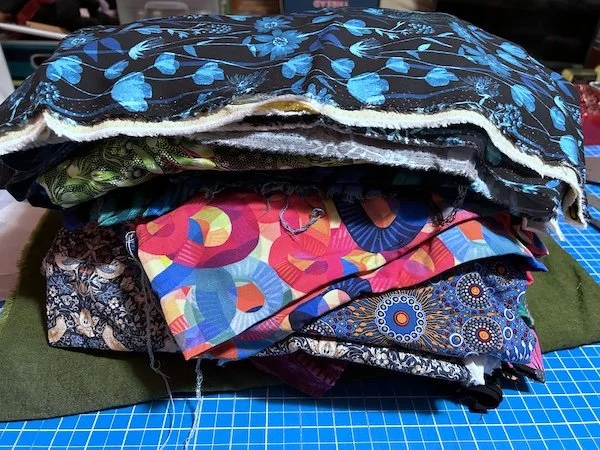
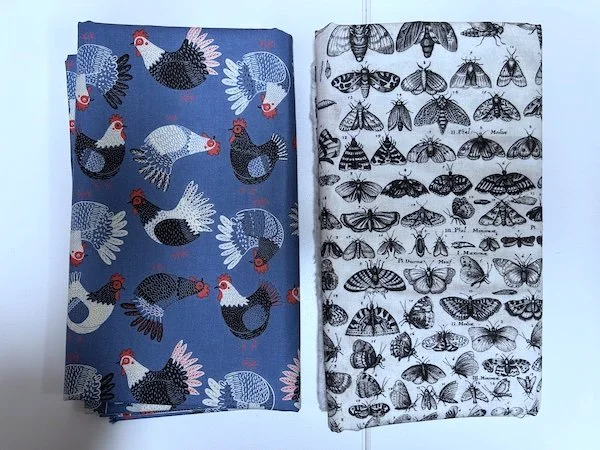
I was going to make a muslin out of Walmart remnant fabric, but I didn’t have enough of anything. The width of the legs—about 15" at the hem—makes this a very fabric-intensive pattern. I ended up using a yard and a half of a Kaffe Fassett wideback (108"). When Kaffe and Brandon Mably were at the store last fall, Brandon pulled this bolt off the shelf and told me that he had designed this print for the Collective and thought it would make a great dress. I didn’t make a dress, but I think he’d be happy to know it did end up in a garment.
I love the Kaffe widebacks. They are printed on a cotton sateen substrate and are perfect for garments. I am noticing that more designers, like Tula Pink, are starting to use the same substrate for their widebacks. The Burnside Bibs I made for Sammy were out of a similar cotton sateen. The sateen does like to fray, though, so serging the seams is a must.
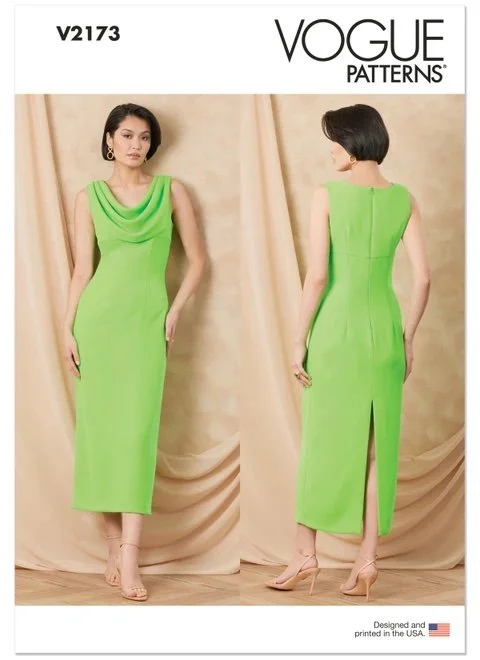
I measured the rise on the McCall’s pattern before I started and compared it to the Style Arc Linda pants, which is one of my favorite pants patterns. The lengths were similar, so I thought the McCall’s pattern was going to be okay, and it is—mostly.
Making pants for women’s bodies is hard, which is why most women don’t like to make pants. The measurements don’t tell the whole story. Two women could have the same waist and hip measurements but have entirely different body shapes. One might have a flat butt and one might have a more shapely derrière. The crotch length might be the same, but the shape could be different.
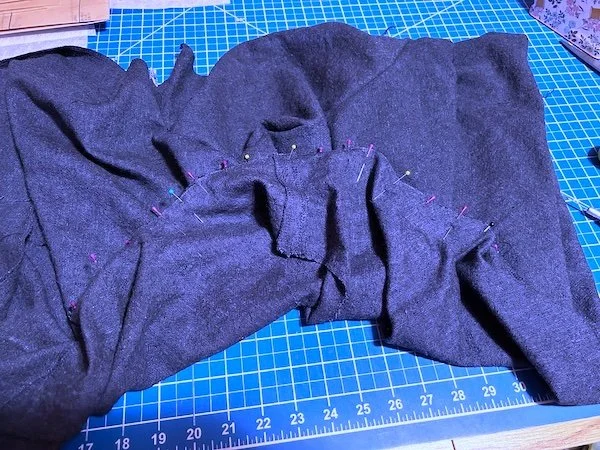
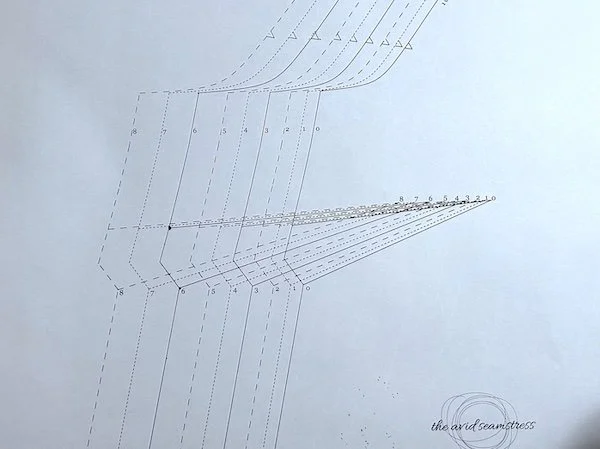
When I tried on the culottes, I noticed that the front pleats were not hanging nicely; the entire front of the pants seemed to be pulling to the back through the crotch. I’ve run into this problem before. Sometimes, the fix is as easy as cutting a wedge off the back crotch hook, flipping it over, and attaching it to the front crotch hook to move the inseam toward the back, which I did on the Free Range Slacks pattern. I did a quick check of my theory by putting the culottes on backwards, and they fit much better.
[I would love to have illustrations to accompany this but my drawing skills are sadly lacking. Handmade PhD has a good explanation of this fix here.]
That adjustment has to be made at the patterning stage, so it wasn’t an option for the finished culottes. Fortunately, these pants have a lot of fabric in them. I ended up sewing a deeper crotch seam—by about half an inch—and that alleviated the problem. And then I went back and changed the crotch shaping of the McCall’s pattern so that it matches that of the Free Range Slacks.
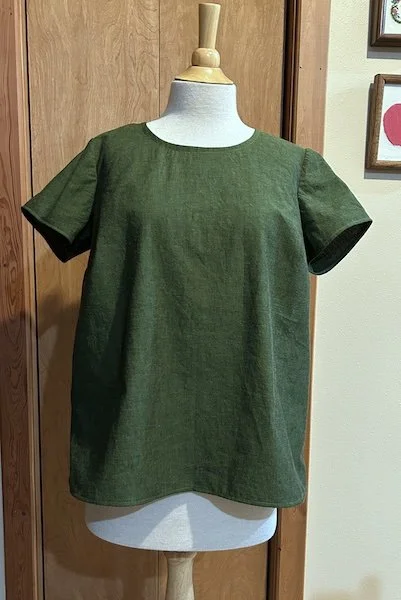
I need to make a simple black cotton top to wear with these culottes.
******
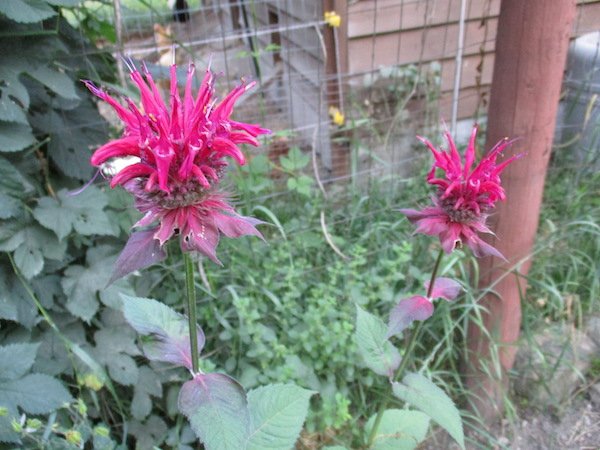
I cleaned up the herb garden yesterday afternoon. Today, I’m going to plant a few things out there that I purchased in Washington state last month, including two white lavender varieties and a bee balm variety I haven’t seen before. I’ve also got to address the weed problem in the gravel around the beds. We put down a heavy weed barrier at the beginning of that project, but we did not get washed rock and we should have. The rock we did get came with enough dirt attached to it that weeds stubbornly pop up in the paths around the beds. I pull them when I can, but last year they got away from me. This year, I want to spray them with a vinegar/salt/Dawn dishwashing detergent mix.
It’s time to plant peas, and I am going to lay out black plastic and weed barrier in the big garden before the weed seeds sprout. If only the vegetables were as tenacious as the weeds. 🫤