The Garden Goes In

I didn’t get the entire garden planted yesterday, but I got a chunk of it done. I started with the tomatoes. Every year, I try to cut down on the number of tomato plants and every year I end up with more than I planned. This year, I capped it at 18 plants. Most are paste tomatoes—Northern Ruby and Oregon Star—with three green varieties and a few others thrown in for fun. Sarah started one called Gargomel and I am eager to see how it does.
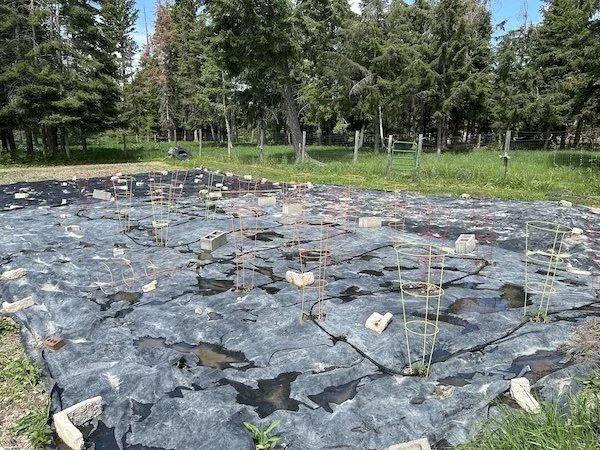
I move crops to a different part of the garden every year. It confuses the pests, not that I have a ton of pest pressure. I spotted a good-sized garter snake over by the peas, so we are off to a great start in the ecosystem this season. I tried to get a picture of it but it slithered underneath the plastic before I could take out my phone.

I also put in some of the squash. I am trying to be deliberate about where I plant things, so the butternut squash, Georgia Roasters, and buttercup squash—all things that want to travel—are in one area. The zucchini, cucumbers, and melons will be in another area. The cukes and melons also vine out, but not as much as the other varieties. We put a lot of aged chicken and pig manure in the garden this year and I am expecting everything to grow really well.

I am trying some new weed barriers this year. These are similar to the ones that commercial growers use. They are 3' wide with pre-cut holes. I wish I had bought more because now they are sold out on Amazon. I’ll get a picture after I get them planted. I have 100' of single-hole barrier, which is where I will plant the cabbages, and 100' feet of two-hole barrier, which is where the peppers and beans will go.

The husband planted all the apple trees. I need to stop with the apple trees. Susan put about two dozen of them in the sale (she grafts them) and I bought a Yellow Transparent. I have two Lodi trees, but I have always wanted a Yellow Transparent.

We also pulled out all the hoses, both regular hoses and soaker hoses, and I started laying them out.

There will be no garden work today because I have three appointments in town. I have an eyebrow wax at 9 am, I get my permanent crown put on at 10:30 am, and I have a haircut at 1 pm. I’m calling this a 25,000 mile tune-up day. It’s possible we may get some storms this afternoon, too. Today is also our 36th wedding anniversary. I think we will try to have date night this weekend to celebrate.

We got up to 83F yesterday, which felt hot to me. I don’t do well in the heat, which is why I like living in Montana. I work from about 6-10 am and then I give up. The husband and I put the shade cloth back on the greenhouse to cut down the heat in there, too.

Once the big garden is in, I will work on the herb garden. The war against weeds is never ending, rather like the war against dirt.
We Sold Plants

Another plant sale is in the books. We sold most of the inventory and made $5700 for the homestead foundation. As much as I keep saying that I don’t want to do it again next year, I’ve decided that the plant sale is like childbirth. After a few months, I will forget how much work it was and I will sign up to do it again. I have a core group of people who put in a lot of work—Sarah, Susan, Sandy, and Jody—and as long as they are willing to help me, we’ll keep going forward.

I must have been exhausted because I crashed into bed at 6 pm last night and didn’t wake up until 5 am this morning. 🛌

Sarah and I got a delightful surprise during the sale, too. Someone we both know from our time in the spinning and knitting world showed up to buy plants. It turns out she lives in the valley! I am hoping we can reconnect with her now that we know she’s local.

As usual, I was so busy that I didn’t take any pictures. One of the other board members was there to help and she was taking pictures, so hopefully she will share them.

We have a few more things to wrap up—the Food Bank will come this week and pick up the leftover plants—but then it’s on to the next project. I have to plant my garden. While I was at the sale, the husband spent the day being the Lawn Ranger and mowed both properties. I just have to mow the garden and I’ll do that this week. I like the exercise.

******

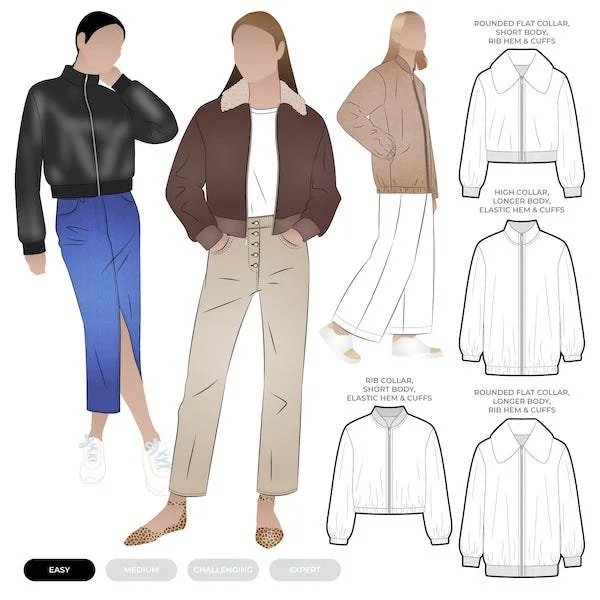
I am not ready to begin cold-weather sewing yet, but I do love the new Sid Bomber Jacket pattern from StyleArc:

I am so short-waisted that a normal bomber jacket looks weird on me, but this one comes in a long length! Yay! I am putting it on the list as a possible make for this fall.

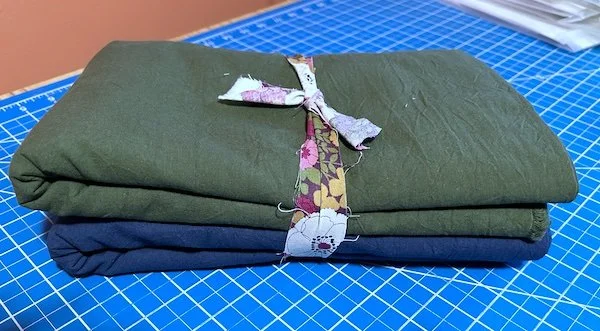
I ordered two cuts of Kona Crush from an Etsy seller and it arrived this week:

Crush is going to be out of production soon—if it isn’t already—so I am stocking up on a few colors.

What the Husband Does

I’m married to him so you might guess that I rather like the husband. He works hard, he is well-respected in the community, and he has been a wonderful husband and father for over three decades. Does this paragon of virtue have any faults, you ask? Well, he eats a lot of food, but other than that, I have no complaints.

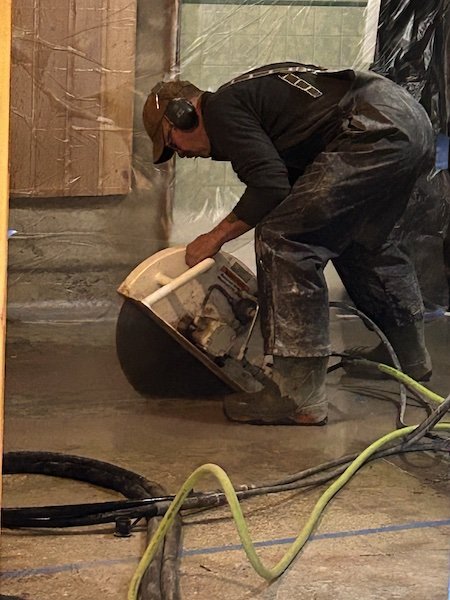
I mentioned that our church is putting new bathrooms and showers in the lower level of our building. Part of that work involves cutting out the old concrete floor to put in new plumbing. It just so happens that the husband knows how to cut concrete. (There is one other guy in the valley who cuts concrete, but I doubt he has the kind of setup that the husband does.) A few guys from church did the demolition and prep work, and yesterday afternoon, the husband and crew went to do the cutting. I stopped by on my way home from town to take pictures.

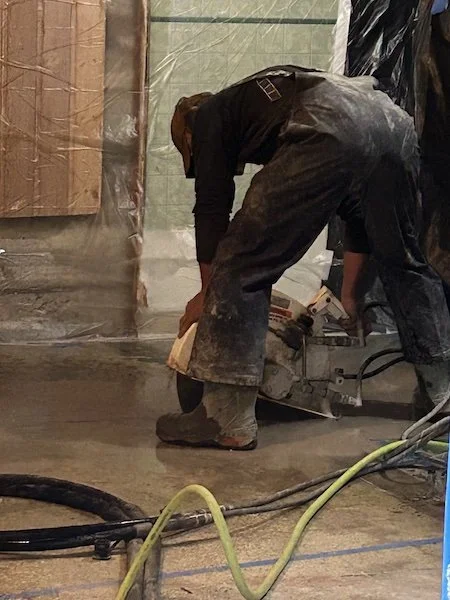
I was taking pictures from outside the room where he was cutting. He has a large saw that is cooled with water—the diamond blades alone cost several hundred dollars.

While he was operating the saw, the crew was sweeping up the water and making sure he had a clear path.

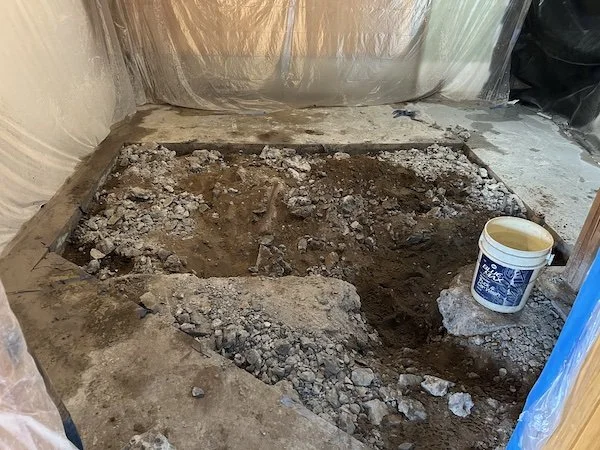
This was the aftermath in the men’s restroom:

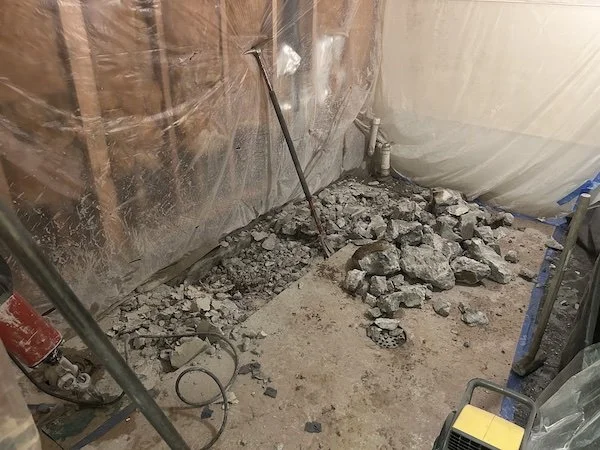
And in the women’s restroom:

All that concrete got jackhammered out and hauled to a trailer outside. This is a big, messy job, but we’re all excited about the improvements. It’s also kind of fascinating to see how volunteer labor built a church in Montana in the 1960s. 🧐

******

Two more days and the plant sale will be over. Yesterday evening, I went to the elementary school to pick up the leftover plants from their sale. We’ve had this arrangement for a couple of years—they hold their plant sale first and donate what’s left to us. Unfortunately, despite sending an e-mail last week and asking for help, the only people who showed up to help me were an elderly couple. (Sunnie, I miss you more than you know, and Sarah, I didn’t expect you to help because you have already done more than your fair share!) We managed to bring about half the plants back to our greenhouse. We’ll get the rest this morning. I just hope we have enough help tomorrow morning when we have to set up. And I think this is going to be the last year that I chair this fundraiser.

Planting Baby Larches

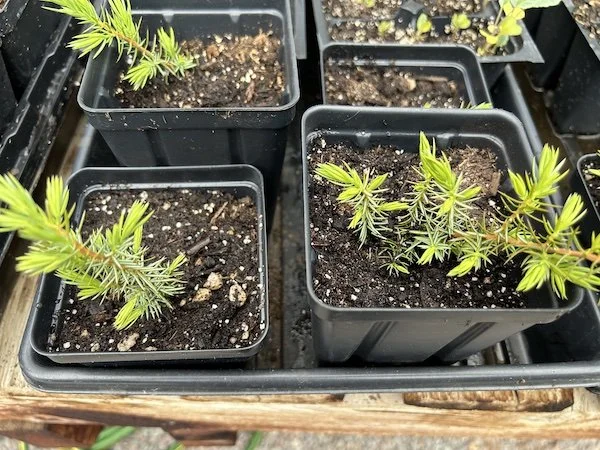
When we were digging up lavenders at our friend’s house last week, I found several larch seedlings and brought them home, too. After the plant sale, I’ll put these out in the woods and make sure they are protected for the first year or two.

Larches are beloved trees here in Montana. They are a deciduous conifer; in the fall, great swaths of the mountains turn yellow as the larches get ready to drop their needles. The sight may not be as dramatic as the leaves turning in hardwood forests back east, but it is still very pretty.

All of the plants for the sale have been labeled. I’ve reached the point where I just want the sale to be over so I can move on with my life. Babysitting plants for two months is a bit stressful. And Charlotte will get moved out to the greenhouse once all the plants are out of there. I’ve seen a few other spiders in residence so she will have company. If she wants to have babies, that would be a better place to hatch them than in my kitchen.

******

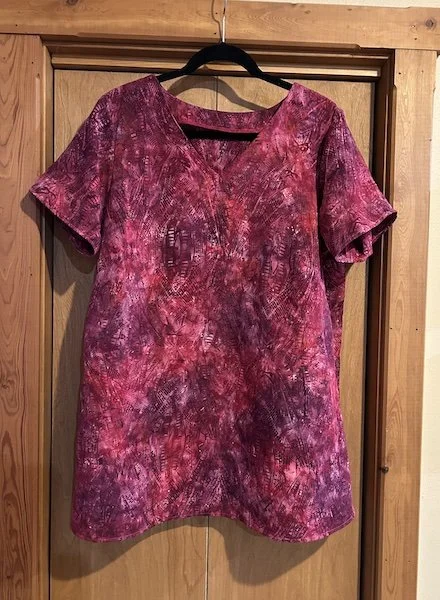
I finished the raspberry batik rayon top yesterday afternoon. A couple of thunderstorms came through—one with small hail—so it was a good afternoon to stay inside and sew:

I used my self-drafted top pattern. My pattern is a bit looser and longer than the Scout Tee but the effect is the same. This one has a V-neck with a facing. I can’t remember where I bought this fabric. It is a tad heavier than most rayon batiks I’ve sewn with, which is a good thing and a bad thing. It doesn’t wrinkle as easily, but it’s not what I would call light and airy, either.

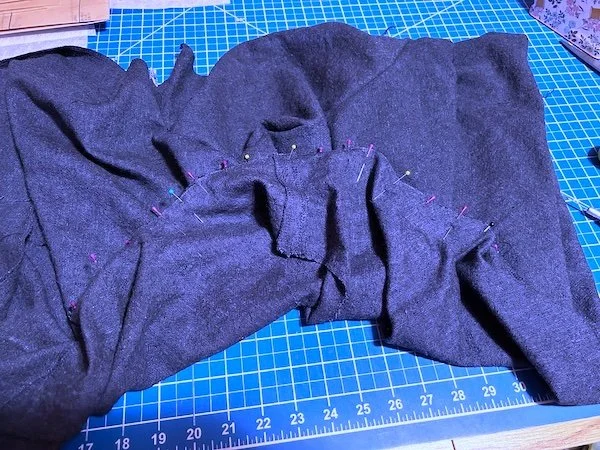
I looked over my pile of fabrics for tops and pulled five to work on. The rest went back into the stash. I also set aside some navy blue linen/rayon fabric for a pair of Rose Pants. That fabric was acquired during Joann Fabrics’ going out of business sale. I am going to make up what’s in that pile of fabric and then move on to something else. I’m thinking either a bag or a coat. I want something challenging to work on for the summer.

******

I don’t see rain in today’s forecast but that doesn’t mean anything. I’ll probably cut the grass on Sunday because it’s looking like a jungle out there. Next week is for planting my own garden. I think one of the apple trees I bought at Costco in April—the Fuji—is dead. It hasn’t leafed out at all. The others look great. I am waiting for the peas to come up; it shouldn’t be long with all the rain we’ve had. The potato rows are filling in. We should have strawberries in another couple of weeks. Lots to do.

Babies and Bermudas

I’ve been watching baby robins fledge for many years now. The process follows a pattern. One baby is always itching to go and gets out of the nest and walks around on the rafter until it decides to take off. The others usually follow in short order, but one baby is always reluctant to go. It stays near the nest crying for mama until it realizes that it has no choice but to leave.

I was washing dishes yesterday morning when all of a sudden, the last baby robin flew off the rafter and into the kitchen window screen, where it hung on for dear life. Just as I got outside to the porch to rescue it, it fell off the screen onto the porch behind the glider. I edged the glider aside and it flew off into the grass where it went ass over teakettle a couple of times and finally righted itself.

Sigh.

Mama Robin was out in the yard calling to it, so I thought the baby probably would be fine. A bit later, I was coming back from the greenhouse with a couple of pieces of trash to put in the burn barrel. I had to step over a stack of pallets to get to the barrel, and as I did so, the baby robin flew up and out from underneath one of them. It sailed over to the grass outside the herb garden where it landed—none too gracefully—and sat for a few minutes.

I’m hoping that it gets the hang of being on its own. The husband says that the forest animals were fine before I got here and don’t need my assistance. Doubtful.

I had about an hour yesterday afternoon before I had to start dinner, so I cut out a top from some a bright raspberry pink rayon batik. I’m using my self-drafted top pattern with a V-neck for this one. I like seeing the pile of fabrics transform into tops hanging in my closet.

At some point, I am going to want to work on something a bit more challenging, but I need clothing, first.

Burda just released its new line of patterns and I spotted this one:

I am no longer of an age where I can rock dressy Bermuda shorts, but this pattern reminded me of a pair of hot pink wool Bermuda shorts I owned (and loved), much like the ones on the right. I bought them at the Benetton store in Seattle in 1990 or 1991. We were still living on the east coast at the time and I was on a business trip. That was my first visit to Seattle—or any place west of the Mississippi, really—and I stayed at either the Hyatt or Hilton downtown. (DD#2—in 1991, the Benetton store was located at 5th and Pine across from the Rack before moving to the indoor mall where Din Tai Fung is and eventually going out of business.) I think back to that visit and how weird it is that now I have a child living and working in downtown Seattle. I can assure you that it’s a very different place now, and not in a good way, although I still love to visit.

I also remember a Japanese deli/bookstore next to the hotel that carried Japanese knitting magazines. Several of those came home with me, too. And it was very rainy while I was there.

Today’s big task is making sure all the plants in the greenhouse are labeled and ready for sale on Saturday.

About to Fly

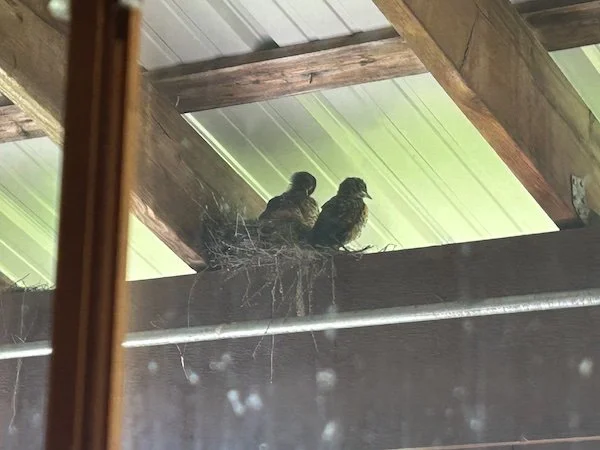
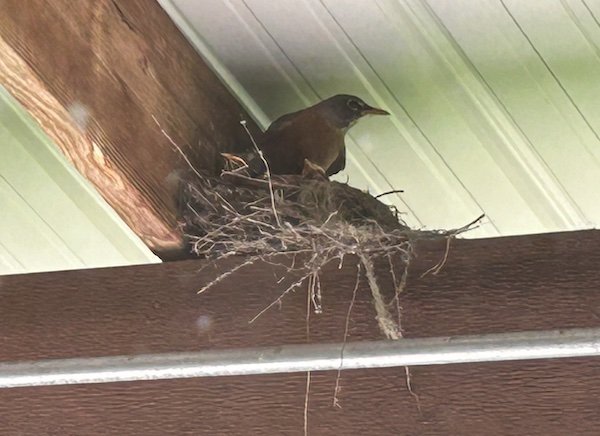
The nest is getting a bit tight for three growing baby robins. Yesterday morning, I noticed that they were out of the nest and fluffing their feathers, so I don’t think it will be long now before mama encourages them to fly. I wish the weather were nicer for them. (Yes, my windows need washing.)

I am always a nervous wreck until they make it safely into the woods. I used to have to worry about our dogs getting them. The mama robin usually coaxes them to the herb garden, first, which is a good playground for learning to fly.

We’ll see if the adults have a second batch of babies. Some years they do.

The husband put up my weather station yesterday morning. He mounted it on one of the smaller outbuildings. We have it paired to our phones and can check the weather here any time we want to.

I am such a nerd.

I ran up a quick muslin of the Made by Rae Rose Pants—shorts version—yesterday afternoon. I like the style very much. The pattern needs just a few tweaks. I made the usual adjustment to the crotch hook, shaving a wedge off the back pattern piece and moving it to the front pattern piece. I’ve had to do that on every pants pattern I’ve made, so it must just be a variation in the shape of my pelvis.

I have a length of the most gorgeous royal blue rayon twill in my stash that I think will make a lovely pair of Rose Pants. I can’t remember where I got it but it’s stunning.

******

Our church is currently without a pastor. Our former pastor retired in October 2022 and we had a transitional pastor for three years. We chose not to renew her contract knowing that we would have to become a lay-led congregation while we continue our pastor search. Our regional conference has quite a few lay-led congregations because Mennonite pastors are a scarce commodity and most want to stay in the east and midwest near family.

Being a lay-led congregation for the past six months has not been terribly onerous, and I say that as a member of the committee that does the worship planning. (Elaine might have a different perspective as she is also on that committee. 😉) Everyone in our congregation has pitched in willingly to cover tasks. Our leadership team is working on a capital improvements campaign and the first project is to renovate our church basement. We’re hosting a bike tour at the end of July and we would like to have ADA bathrooms and showers available for participants. The project is well underway. Some time this week, the husband will be cutting out the old concrete so new plumbing can be installed. It’s actually been fun brainstorming and thinking of new possibilities for the space. One of our members joked yesterday that we should call it “The Holy Hostel.”

I am itching for a road trip. After the plant sale is over, I might see about going to Missoula or maybe even Spokane.

Potatoes and Lavenders and Wedding Dresses

My friend Susan and I went to another friend’s house yesterday morning to get lavender plants for the plant sale. Our other friend has a beautiful property with several nicely-kept lavender hedges—unlike my feral lavender hedges—and her hedges also throw off lots of babies. Her seedlings are easy to pull up because they are growing in the wood bark mulch that has thick weed barrier underneath. (I am wishing we had done bark instead of rocks in the herb garden but oh well.) It took Susan and me about 20 minutes to pull up two large boxes of seedlings. I brought them back to the greenhouse and spent the rest of the morning potting them up. I potted a total of 116 seedlings. We may not sell that many, but all the plant sale leftovers go to the Food Bank so the lavenders will grace many yards in Flathead County.

The weather was cool and misty in the morning but went sideways after lunch. We got rain, sleet, a bit of wind, and I even heard thunder. Apparently, it snowed down in Kalispell. I made a big pot of sauerkraut soup for dinner. The husband ate half of it. I make a broth-based version with bacon, potatoes, carrots, locally-made kielbasa, and sauerkraut.

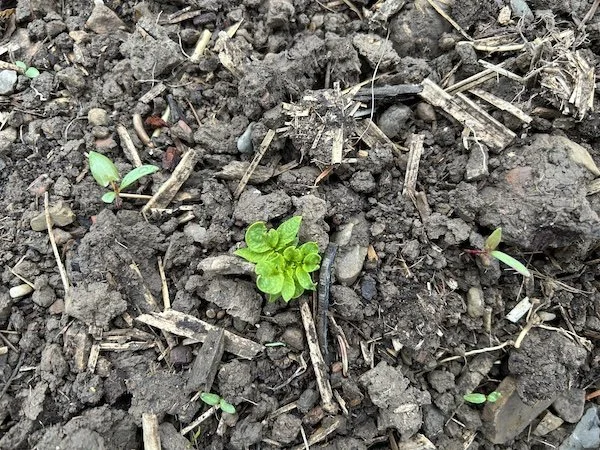
A couple of potato plants are up:

I love that vibrant green color.

DD#1 drove to Seattle yesterday to go wedding dress shopping with DD#2. I got texts throughout the day with photos of the options. DD#2 is tall and willowy and looks good in everything so she will be beautiful in whatever she chooses.

[When the girls were little and my mother was visiting, we would usually take a trip to Missoula. The mall there had a Children’s Place store. When DD#2 was three years old, she informed my mother that she could choose her own clothes, thank you very much. She was quite stylish even then and destined for a career in fashion.]

I may get some sewing in this afternoon as it looks like the weather will continue to be rather crummy. The forecast calls for cool and unsettled weather until about mid-week, but things should be nice for the plant sale on Saturday. I’ll be glad to have the plant sale done and my own garden put in. The schedule gets much easier once I am not tending hundreds of seedlings every day.

A Beautiful Jacket

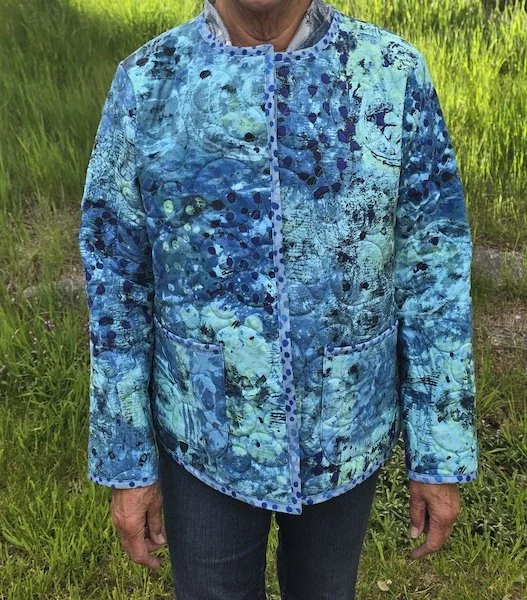
The Other Janet sent me photos of her Tamarack jacket. She had to finish the binding after class. Discussion is currently underway about snaps versus buttons over snaps—husbands have opinions, who knew?—so the front closure isn’t finished. It turned out beautifully:

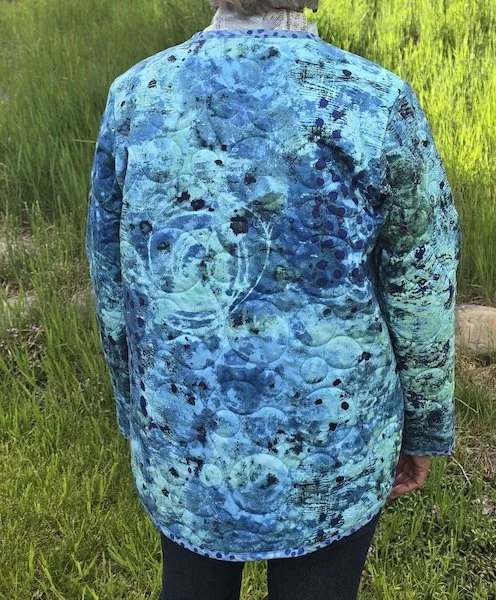
And the back:

We made a couple of alterations to the pattern and tested them on a muslin before we cut out the jacket. (Hobby Lobby sells quilted muslin fabric that works great for these kinds of jackets.) The back of the Tamarack is very oversized and tends to flare out. When I made the store sample, I shaved a couple of inches off the lower back sides. We made the same adjustment on this one. The base of the armscye was also big, so I moved that area in about half an inch and it fits much better now.

The fabric is a Marcia Derse print. I love her stuff. The Other Janet bought the fabric and a silk batt and one of the staff at the store quilted it for her on a longarm. The circle quilting pattern was the perfect choice.

******

I tore down our bedroom Thursday, cleaned it, and put it back together. I love my house, but the amount of dirt and dust that accumulates is insane. Some of that is because we lived on a dirt road for the first few years (it’s paved now). Some of it is wildfire ash. Some of it is from having a fireplace and a wood boiler. Some of it is what the husband brings in. Wherever it comes from, it just recirculates and accumulates. The dust is also why I bought the industrial air scrubber, which runs while I do the deep cleaning. It helps a lot but it sounds like a jet engine, so I only run it when I am cleaning.

I stripped the bed and took down the curtains and washed everything. I moved furniture, wiped down all the hard surfaces including the baseboards, and vacuumed. I had to empty the Dyson at least two or three times during this process. Along the way, I sorted stuff to toss or donate. One room takes me an entire day to clean but it looks and feels so much better when it’s done. It’s good exercise, too.

I think my office is next on the list.

******

I traced off the Rose pants pattern yesterday. I’m making a muslin in the shorts length—I really just need to check the fit of the crotch and the rise—and I am using an old linen sheet from Target. I love their linen sheets, especially for summer. The husband wore a hole in these with his feet so they are getting repurposed.

Next week is a busy week because of the plant sale. I might have time to knock out a top, but I suspect I will be busy with other tasks.

Getting Faster

I got the peas in yesterday morning and spent the rest of the day sewing. The forecast windstorm never arrived—east of the mountains got hammered—but it has been raining since last evening.

I was able to complete this Scout Tee in one day. I’m getting faster.

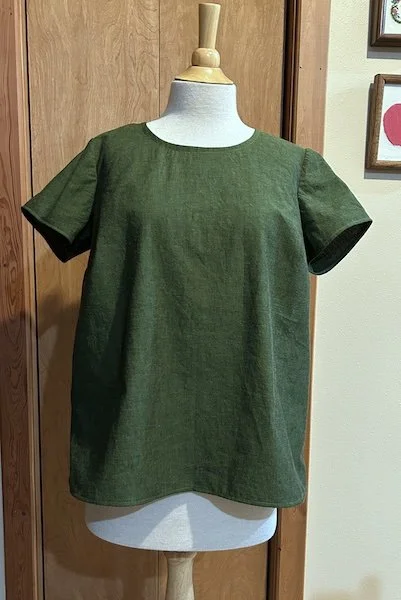
I bought this fabric from Vogue Fabrics at Sew Expo in 2025. I thought it was a linen or linen/rayon blend, but after working with it, I wonder if it has some silk in it. It was a bit fussy because it’s rather a loose weave, but everything came together nicely. I used the short sleeves from the expansion pack rather than the cap sleeves from the original pattern.

I’m going to take a break from sewing today and do some spring cleaning. I’d also like to trace the Rose Pants pattern so I can make a muslin of that one.

******

In other news, My Tempest weather station was delivered yesterday. The husband is going to figure out where to mount it.

I’ve got a canning class on the schedule through the Mountain Brook Homestead Foundation. It will be on Saturday, August 8, by which time we should be swimming in pickling cukes. I taught this same class a couple of years ago and it was great fun.

We are buying a new propane tank for the rental house. The rental house and the greenhouse each have a 250-gallon propane tank. However, the (very old) propane tank next to the greenhouse is leaking through the valve, so the husband shut off that tank. (Thankfully, we can use the diesel heater as a backup heat source because we’re supposed to get down to the low 30s overnight this weekend.) He suggested we move the existing 250-gallon tank from the rental house over to the greenhouse and purchase a new 500-gallon tank for the rental house. I called the fuel service company yesterday to get that process underway.

I made my plane reservations for the end of August for a visit to my mother. Our high school is also having a 125-year all-class reunion that weekend. I am hoping to see all my Avon peeps (and more) while I’m there.

Lots of stuff is happening. Lots is going on behind the scenes, too, that I can’t talk about yet, but I’ll make an announcement when the time is right. 😉

A Top a Day?

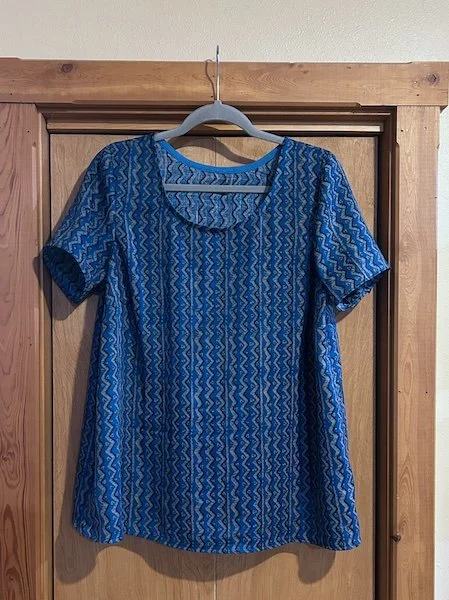
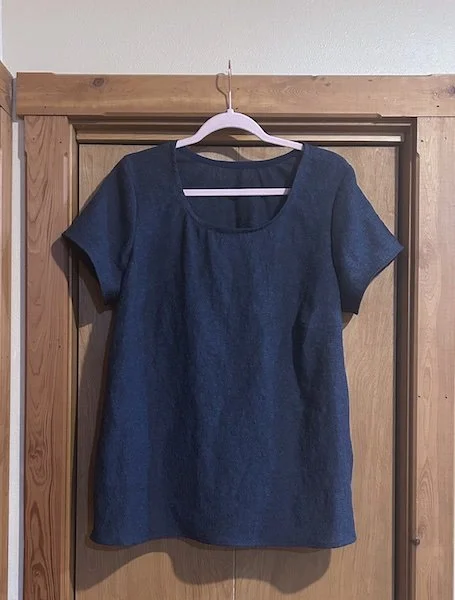
I haven’t quite reached the speed of making a top a day, but I finished the navy blue Scout Tee out of Kaufman Brussels Washer Linen, which is a linen/rayon blend.

I do love this fabric despite its tendency to fray at the slightest provocation. Pacific Fabrics in Seattle carries the entire color range although I bought this yardage at the quilt store here. I know I have other a few more chunks of BWL in the stash.

This is going to be in heavy rotation, I’m sure. Sometimes it is boring to make basic wardrobe pieces out of solid colors like white, black, and navy, but they are the heavy lifters.

I’ve got two more pieces of linen-ish fabrics waiting to be made into Scout Tees, and then I’ll probably move on to a different pattern. Or not. We’ll see.

******

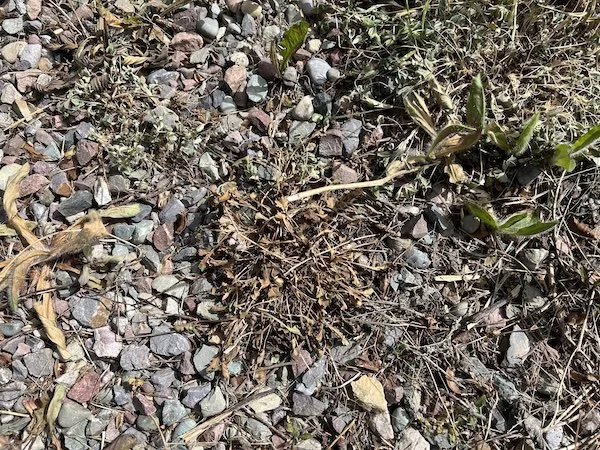
The weed killer is working very nicely, although I am going to have to go through and pull all the dead vegetation:

Still, this is effective.

I am going to plant peas this morning. We are supposed to get thunderstorms and strong gusty winds this afternoon. If it’s going to rain, it might as well rain on peas in the ground. I cut the grass in the garden yesterday and it looks much better out there.

I picked up six more apple trees from Susan yesterday. These are grafts that came from trees on the family homestead of a friend of ours near Bigfork. The original apple trees are over 100 years old. I somehow ended up with another one of the grafts a few years ago and that tree has taken off. Our friend thinks they are some kind of Macintosh-type variety. Friend took the ones that she wanted and these were left. I gave two to our neighbor next door and we’ll figure out where to put the rest of them.

I think I may have a broody hen. One of the chicks I got from WS year—which almost looks to me like a lavender Orpington—has been parked in a nesting box for over a week now. I am not sure how many eggs she has under her, but I would not mind having a few more chicks.

Another one of our neighbors stopped by for eggs yesterday, so he and I sat on the porch for a bit and visited. The two male hummingbirds—the little flying roosters—were chasing each other around the feeders, the mama and papa robins were tag-teaming bugs and worms for the babies, and two swifts came swooping through the porch, also in search of bugs. Bunny was sitting out in the yard, calmly munching on dandelions. No one seems to care that we’re around.

After I plant peas this morning, I am going to sew for the rest of the day. It might be a good day for a big pot of soup, too.

Noisy Baby Robins

The nest outside the kitchen window has at least two baby robins in it. I watch the parents go back and forth getting worms and bugs to feed the noisy little babies.

One of the robins found the birdbath in the herb garden. I see lots of birds in the herb garden but that robin is the only one I’ve seen in the birdbath.

I spent about three hours yesterday morning transplanting plants in the greenhouse. The plant sale is May 23 and we need to have everything labeled and ready to go. I’m hoping to get the grass cut in the garden this morning. It might rain tomorrow (who knows?) and I want to stay ahead of it.

After lunch yesterday, I worked on a Scout Tee out of another chunk of Brussels Washer Linen. This is a dark denim blue color and I think it will get worn a lot. I got as far as pinning in the second sleeve.

I’m setting these sleeves in flat. I have nothing against setting in sleeves the conventional way, but if I can set them in flat, I’ll do it that way. The only issue I am having with the fabric is that it frays like nobody’s business. I staystitched everything and am serging all the exposed edges.

I’ll finish this one and cut out another one. I might as well make four or five while I’m at it. I bought the Sleeve Expansion Pack, too, just to mix it up a bit.

One of my later-in-the-summer project ideas—after our summer guests return home—is to set up a space in the rental house where I can do some filming. I feel myself sliding inexorably toward a YouTube channel of some kind. The podcast already has one, but it exists only so I can park the audio recordings there.

I am still cogitating on this plan. There may be pitfalls I haven’t uncovered yet. 🧐

Pants and Tops

I spent the past two days at the store helping “the other Janet” make herself a Tamarack Jacket. The Other Janet used to be the class coordinator for the store. She just got back from a few months wintering in southern Utah and it was fun to catch up with her. Of course, I forgot to take photos, but she promised to send me some of her finished jacket. She still has to sew down the rest of the binding and sew on the snaps.

I will not be going to Bernina University in June after all. I am so disappointed because I have been looking forward to this year’s BU since we got back from Salt Lake City. However, some situations are beyond my control and this was one of them. My consolation prize—sorry, but that’s how I am thinking about it because I am so sad about BU—is that I will be going to our denomination’s annual meeting in Albany, OR, instead. (JC, we should talk.) Our congregation needs a delegate and I usually attend as one. The one bright spot is that my friends, Mike and Kathy, who live in Tacoma, will also be there. Mike is giving a presentation on his work with the Tacoma Refugee Choir.

It is what it is. I will have a good time at annual meeting; there just won’t be any sewing.

*****

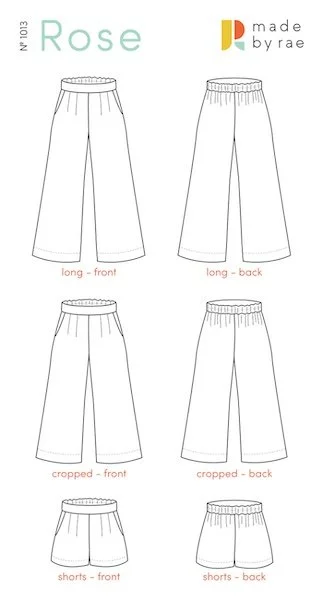
I bought another pants pattern just because. These are the Rose Pants from Made by Rae:

I like the elasticated back on these. One of these days, I will make a pair of fly-front pants, but for now, I am liking the ease of pull-on pants. Also, these are high-waisted pants, and I feel the need to maintain a pattern library of high-waisted pants for the day when low-rise pants come back into style. 😩

******

The grass is about 6" tall so I will be mowing this afternoon. We are back down to one Bunny, which has led to a lot of speculation about what happened to the other two. I think they may be living across the street and came over for a playdate.

The robin has two babies in the nest (that I have seen) and is busy keeping them fed. No birds have yet visited the birdbath. We had a deer jump the fence to the big garden and nibble on the apple trees, so the husband put rope across the top of the fence to make it taller.

Charlotte really needs to get moved out to the greenhouse. This week.

We thought we might get piglets this weekend, but our supplier ran out so it looks like they will arrive in June. I just need to call the processor tomorrow and make sure we are on the calendar.

The next two weeks will be full of gardening and sewing.

A Study of Raglan Bust Darts

I have a large library of patterns. That library was easy to build when Joanns put the Big 4/Big 7 on sale every week. I’ve cut back a bit because patterns are more expensive now. Also, indie patterns usually come in the form of PDFs that have to be printed, and all those large-format pages add up. Still, comparing patterns has helped me to better understand fitting—and by extension, pattern drafting—even if I never make the actual garment.

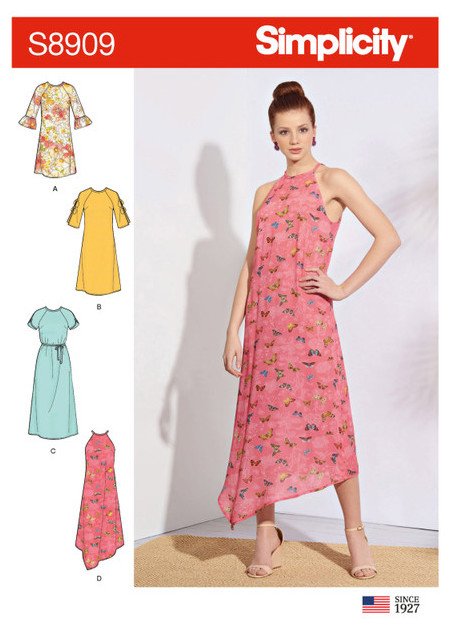
I’ve been looking at and comparing lots of raglan patterns this week. I think I really lucked out with the fit of the Simplicity 8909 raglan. I haven’t had to change anything about the raglan lines or the fit of the upper bodice. Once I took out that center back seam and figured out what size I needed for the front, the pattern was pretty much dialed in. I am still playing with the level of the bust dart but that’s just me being persnickety.

As I mentioned, we traced and sewed the Avid Seamstress Raglan Dress pattern in serger class on Wednesday, and now I’m going to talk about Why Making Garments That Fit Is So Hard.

Size range expansion has been a big topic in the indie sewing pattern world for several years now, with most companies drafting for a wider range of sizes in response to customer requests. In most cases, this is not a small undertaking. It is not a matter of just making the smallest size proportionally bigger. Pattern grading doesn’t work that way. Certain parts of a pattern will change at a different rate than other parts. And when it comes to larger sizes, patternmakers often use a completely different “block” or basic shape than they use for smaller sizes.

Most garment sewists are aware that the size you choose from the pattern does not correspond to the size you wear in off-the-rack clothing. Pattern sizes are almost always larger, so someone who wears a size 12 in RTW may have to make a size 16 from the pattern. This causes a bit of angst for some people, although my advice is to take the emotion and judgment out of the equation and just treat the numbers as data. Some indie designers have gone to alphabet sizing or other systems to get around this issue.

Here is where it gets tricky. Not all indie designers will remember to tell sewists what kind of body the pattern block is designed for. Seamwork is one company that does a fabulous job in this area. Their patterns always include something like the following description:

DRAFTING NOTE: Sizes 00-18 (Misses) are drafted for a C cup. Our size 8 fit model is 5’8”. Sizes 12-30 (Curvy) are drafted for a DD cup. Our size 20 fit model is 5’9”.

That drafting note tells you what bra cup size the pattern is drafted for, which is important information. Most commercial patterns are drafted for a 5'5" fit model with a B-cup bra size. In my years of teaching sewing classes, I have had exactly ONE student who fit that description and who didn’t have to make any adjustments to the pattern before sewing it. And the garment fit her perfectly. She is a unicorn, at least in my classes.

I have noticed that many—most?—owners of indie pattern companies are svelte young women on whom a potato sack would be flattering. Jenny at Cashmerette is one exception, and she has built her entire (very successful) pattern company around patterns for larger-sized and curvy women. Sarai, at Seamwork, is another, but she is taller than average.

I don’t want anyone to think I am picking on The Avid Seamstress patterns here. I like their designs and I think the drafting and instructions are well done. I am using their Raglan Dress pattern to show differences in drafting results, not as an indictment of a bad pattern.

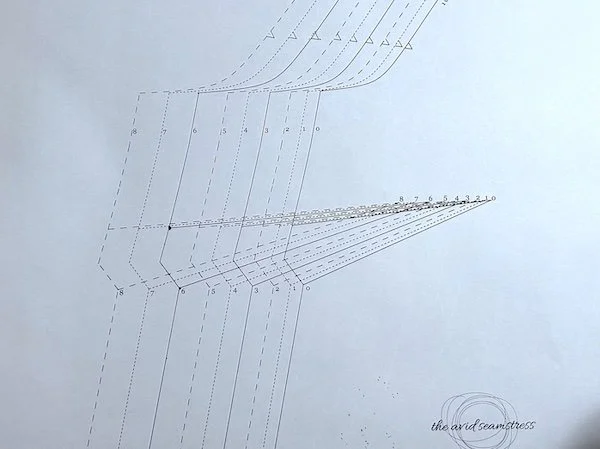
When I began tracing the pattern on Wednesday, I knew right away that I was going to have to make some adjustments to the pattern. For purposes of class, though, I traced it as presented. These are the bust darts:

Although it isn’t spelled out on the pattern, in the instructions, or on the website, I suspect this dress has been drafted for that mythical 5'5" woman wearing a B-cup bra. I chose the dress size to trace based on the finished bust measurements of the pattern (body measurement plus wearing ease). No high bust measurements were given. The bodice does fit around my chest, but it doesn’t fit well, and I wasn’t surprised at the fit when I popped on the dress.

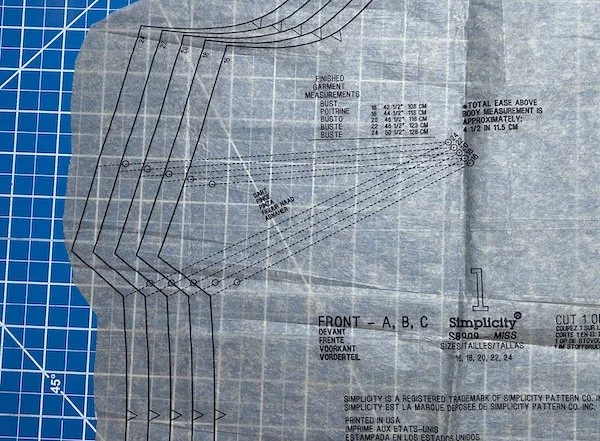
In contrast, here are the bust darts for the Simplicity 8909 raglan. I can tell you that this dart intake is about twice that of the dart on the AS Raglan Dress pattern, meaning that the dart is almost twice as deep and provides more room in the bust.

Interestingly, the Simplicity.com website states that “Misses patterns are made for a B cup with 2" (5cm) difference between bust and high bust measurement.” Simplicity says they are using the same drafting yardstick—no pun intended—but the final pattern looks completely different.

If I want to use the Avid Seamstress Raglan Dress pattern, and I probably will, I am going to have to increase the size of the dart. Or use the bodice from the Simplicity 8909 pattern and lengthen it into the same kind of dress. This is why I frankenpattern so much. When I find something that works, I just move it around to different patterns.

I spend a lot of time wondering how to get around these conundrums. I know enough to be able to recognize when a pattern is going to need adjustments even before I make the muslin but I also spend a lot more time looking at an analyzing patterns than the average sewist does. I wonder that anyone is actually able to make garments that fit given all of these variables. If I am missing something obvious, please let me know!

From Theory to Practice

The student in my serger mastery class yesterday was one of the regulars at the store. She has taken several classes from me before but doesn’t use her serger enough to be comfortable with it. I hear that from many people. Unless you’re using your serger a couple of times a week, it’s easy to forget things from class to class.

Because it was just the two of us, she asked if I could walk her through a project that would help her to know what features of the serger she needed to use and when. She mentioned that she is planning to make a dress for her granddaughter that can be used as a costume. (Granddaughter is in musical theater.) We didn’t have to start from ground zero because she knows basic dressmaking. I thought for a bit and came up with an idea.

As it happened, I had stopped at the blueprint shop on my way to class to get a large-format printout of The Avid Seamstress Raglan Dress pattern. I suggested that we make a muslin of the pattern—which I needed to do anyway to check the sizing—and that would give us the opportunity to try a few different serger techniques on the seams. I bought three yards of muslin and quickly traced off the pattern and cut it out. We spent the rest of the class making the muslin. The store keeps a sewing machine in the classroom so we were able to use that for some of the assembly.

[I have some thoughts about that pattern, but I’ll save them for tomorrow’s post.]

Her request was a good one. Until she asked, I had forgotten that I wondered the same thing when I got my first serger. What serger stitches are appropriate in what situations? In my mastery class last week in Missoula, one of the students mentioned that she thought that stitch #2—which on the Bernina L860 is the super stretch stitch—was meant to be used on knits. It’s actually meant for elastic insertions, but unless she went digging for that information, how was she to know? That machine has something like 16 regular serger stitch options.

Maybe this needs to be a class or a podcast episode.

******

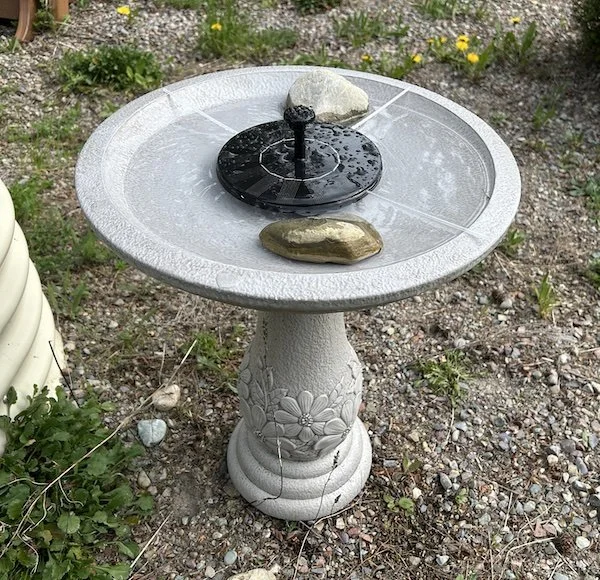
I ran errands after class. I can tell it is summer in the Flathead. Running errands now takes me three times as long as it does during the winter. I decided to postpone my trips to Costco and Walmart for another day. I stopped at Lowes, though, to get a sprayer to spray my weed killer in the herb garden and ended up buying a birdbath, too. I liked this one because it is some kind of rubberized plastic and while it’s not light, it isn’t so heavy that I can’t move it around:

I put a solar bubbler in it. And you can see why I need the weed killer. I need to mix that up soon and get on it, although I might pull some of the larger weeds, first.

******

I continue to be surprised by the weather. In the middle of the night, I woke up to the sound of thunder and the patter of rain on the roof. I hadn’t seen storms in the forecast. My phone was in the bedroom instead of downstairs, where I usually leave it overnight, and the NBC Montana weather app kept helpfully announcing, “Lightning has been detected near your location” every few minutes. That’s the same NBC Montana weather app that has completely botched the forecasts this week.

We need the rain. The long-range forecasts are not looking good. And I am very, very tempted to get a Tempest weather station and have the husband mount it on the roof of the old garage. The Tempest weather information can be fed to the National Weather Service and it’s obvious that they need my help. 🧐

Sewing Fabrics Into Tops

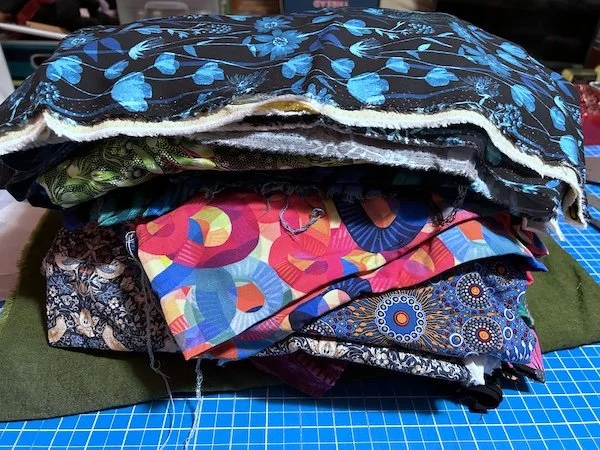
I have organized my sewing projects for the next couple of months. Yes, it’s an ambitious list. This is the pile of fabric I want to turn into tops for the summer:

It remains to be seen how far I get. There are 14 fabrics in this pile, as well as 3-4 Kaffe widebacks still in the stash. I started with the grass green fabric on the bottom, which I think (?) is Brussels Washer Linen. That’s a rayon/linen blend.

Our community homestead foundation had its Spring Pie Social on Saturday and I wore a Scout Tee made from some gray Brussels Washer Linen, so I pulled out that pattern to use it again. My only quibble with that pattern—with all of the Grainline patterns, in general—is that the upper back is too narrow. I’ve run into the same issue with the Tamarack Jacket. I adjusted the pattern before I made the green version, but I may tinker with it a bit more.

For some reason, I had a lot of trouble making this top. I felt like a rank beginner again, and it’s not a complicated pattern. Part of the issue was the thread. I have a lot of thread, but I did not have a green that was a good match. I went to my vintage thread stash—which I save for basting and other non-critical uses—and found a matching Molnlycke polyester thread, still in the plastic wrapper. Molnlycke thread was made in the Swedish town of the same name. I don’t think it’s manufactured any longer.

My machine did not like this thread. I tried several different feeding arrangements and the thread would not feed smoothly no matter which way I set it up. Backlashing was a frequent problem. I tried both universal and Microtex needles. I was able to power through, but not without having to stop and rethread the machine several times.

I also managed to sew the right side of the front to the wrong side of the back, so the bust darts were on the wrong side. 🙄 This fabric doesn’t have a clear right or wrong side, but that was a dumb mistake that happened because I just wasn’t paying attention. I did not discover that fact until the entire garment was assembled. Thankfully, all I had to do was take out part of the side seams, undo the bust darts, flip them to the other side and re-sew, and reassemble the top.

What should have been a three-hour project took most of the day. Still, it fits and I am happy with it. (I should just pad out the dress form so it has the same bustline that I do. . . )

I plan to wear the top today to teach my serger class.

The neckline is bound. I am trying to decide if I want to change it to a facing as I prefer facings to binding. I will say that the binding instructions in this pattern are better than most and the neckline lies nice and flat. I used some matching Kona cotton (color Pesto) cut on the bias.

I am going to drill down until I get through the pile. Batch cutting and sewing may help speed up the process. After this weekend, the rest of May is fairly wide open except for the plant sale on the 23rd. I should be able to set aside a couple of days for sewing.

*******

I took out the Remy Raglan to compare it to the Simplicity 8909 pattern because I thought I might add the bust darts to the Remy. I am putting that off. Adding the bust darts isn’t difficult, but the raglan shaping doesn’t match well and I don’t want to monkey with it right now. It’s probably going to be easier to use the S8909 pattern as the basis for any raglans and adjust it as needed.

Weather Report

I was awakened out of a deep sleep at 1:30 this morning by what sounded like a big branch hitting the roof of the house. I got up and went to see what was going on and discovered that we were getting strong northeast winds coming down off the mountains.

Had a back door cold front been in the forecast? No, it had not. No warnings, nothing. I guess I’ll wait a few hours until the actual weather forecasters get to work, look out the window, and decide to issue an accurate forecast. 🙄

This is why no one in Montana pays attention to winter storm warnings anymore. So much crying wolf, and then when something actually does happen, not a peep.

******

In other news, I spent yesterday afternoon making another muslin of the raglan top and I think I’ve mostly got it dialed in, at least enough to break out the “good” fabric. I moved the bust darts up and now they sit where they should. This is an odd pattern, though, in that I need a larger size for the back than for the front. I had to go down almost two sizes for the front, but the back hangs beautifully now that I have taken out the back shaping. The side seams are nicely vertical. One of the reviewers on the Sewing Pattern Review website noted that she also thought the back was too narrow.

The Avid Seamstress has this darted raglan dress pattern, which I really like:

Fitting is hard, mostly because you make something, put it on, then stand in front of the mirror trying to read the wrinkles to determine what to fix and how to fix it. At the same time, you’re attempting to quiet the voice in your head that is telling you something is wrong with your body. Books and YouTube videos are only so helpful; I found one page in my Sarah Veblen fitting book addressing darted raglans, and it didn’t have the answer I needed. I make a lot of changes intuitively—which for me is basically the same as “trial and error”—and if something works, I file that piece of information away for future use.

Everyone says, “Wrinkles point to the problem.” Well, yes, they do, but that doesn’t mean they tell you how to eliminate them. Kenneth D. King says that every fitting problem comes down to adding fabric, taking away fabric, or moving fabric. Simplistic as that sounds, it’s actually really good advice and I try to look at my fitting issues that way.

For what it’s worth, I am not attracted to tissue fitting AT ALL. That’s the Palmer-Pletsch method where you fit the tissue paper pattern to your body and cut, fold, and tape as needed, then use the pattern that has been adjusted to fit you. I know it works for some people, because the method has a lot of proponents, but it’s hard to tissue fit without a helper, and I just don’t “see” the pattern as well that way. And a muslin is still required. If I am going to make a muslin, then I’ll use that to see where I need to make changes.

My favorite patterns all seem to be mashups, and indeed, I am going to get out the Remy Raglan today to compare it to the Simplicity pattern. I think I may be able to combine the two to make the perfect raglan top pattern.

Machine mastery for tomorrow has been cancelled—no students—although I do have serger mastery on Wednesday. We only offer that class once a quarter, so I don’t like to cancel it. But I have a bonus day of sewing tomorrow that I wasn’t expecting. I am going to try to get this pattern finalized and then start working through the pile of fabric for summer tops.

Revisiting the Raglan

I am close to settling into my summer routine, which is to work in the garden in the morning and sew after lunch. Yesterday morning, I worked for a while in the greenhouse, pruned my lavenders and raked around the beds, and cleaned up the strawberry bed. After lunch, I sewed until the husband came around 3:00 pm. We went out and planted four 30' rows of potatoes, which should be plenty for us for next winter.

My sewing project yesterday was to make a muslin of this pattern:

I’ve got a couple of woven top patterns that fit me well, but I’m always looking for variations. I like raglans and I bought this pattern because it had bust darts, which seem to be rare in a raglan. Oftentimes in raglans, the darts get rotated into the neckline in the form of pleats or gathers, which make more of a peasant-style top.

This style has been niggling at me for a few days. How would this fit? The pattern was already traced—I must have traced it right after I bought it—so all I had to do was to find some fabric and test it. I made a top rather than a dress just to save a bit of fabric and work.

I LOVE IT. I need to make a few modifications. The bust darts fit perfectly but they are too low. Either they have to be moved up about 5/8" or I need to shorten the upper bodice. I need to take a good look at the top again in the fresh light of morning to determine which is the proper fix.

I also have to take out the curved back seam. Curved back seams and I don’t get along. They can add refinement to a garment, but on me, they inevitably hang up on my high hips. It’s far better if I just have a straight back seam that allows everything to flow nicely from my shoulders.

Other than those two issues, this is very flattering on me. The neck opening is high, finished with binding, and closes with a button. I am wondering if I can lower it enough to pull the top over my head and finish it with a facing. In a light linen or chambray, this would be a wardrobe staple for sure.

The sleeves are made in two pieces, which makes them fit very well. I’ve seen that in coat patterns but never in a top or dress. Often, the top of a woven raglan sleeve will have a dart.

Once I get the top dialed in, lengthening this pattern back into a dress should be relatively easy. I’m also going to revisit the Remy Raglan by Sew House Seven to see if I can add bust darts into that pattern.

******

Has anyone else noticed that thrift stores aren’t what they used to be? Our Salvation Army store has a list of what they will take and what they won’t, and the list of what they won’t take is longer than the list of what they will take. Sheets—which I sometimes use for making muslins—are virtually impossible to find anymore. I don’t even bother with Goodwill because their prices for pie plates are higher than what new ones cost at Target. I have better luck with the smaller, privately-run stores, although our local Flathead Industries store has had the same 1990s-era BabyLock serger priced at $100 for the past six months. It clearly needs to be cleaned and serviced before it could be used, which would basically double the price. I could clean and service it myself, but I still don’t want to shell out $100.

Get off my lawn. 🤨 I long for the olden days when thrift stores had great deals.

******

Next week is a busy week. I have two mastery classes scheduled—machine and serger—and I’m teaching the Tamarack Jacket class at the end of the week. But at least it’s all sewing.

Bodies are Different

One thing I learned early on in making clothing is that bodies are vastly different. I always use myself as an example in class because I deviate from the “norm”—whatever that happens to be—in several ways:

  1. I am taller than average. I am 5'7" and average is 5'5".

  2. I have a long torso.

  3. My torso is not divided evenly. I am short-waisted but long from my waist to my crotch. I’ll often buy Tall pants and have to hem them, because I need the extra length in the rise, not in the inseam.

  4. I have high hip curves. The widest part of my hips is only about 5" below my waist. The “average” (again, there is that word) is about 9".

As you can imagine, I have some fitting difficulties. Tops are always too short. Low-rise pants were a nightmare for me. Anything belted makes me look like a sausage tied in the middle. Over the years, I have learned which silhouettes are flattering and which are not. I like sewing because I can make the clothing I can’t find in stores. (We’re not even talking about color here, just fit.)

Now, I automatically lengthen any top pattern by 2-3". I measure the rise on all pants patterns and usually have to increase it by at least an inch on both front and back. I sometimes have to grade tops out to a larger size at the hips even if I don’t need the extra room because if I don’t, the tops may hang up on my high hip curves.

[I often wonder how many people think they need a swayback adjustment when what they really have are high hip curves . . . ]

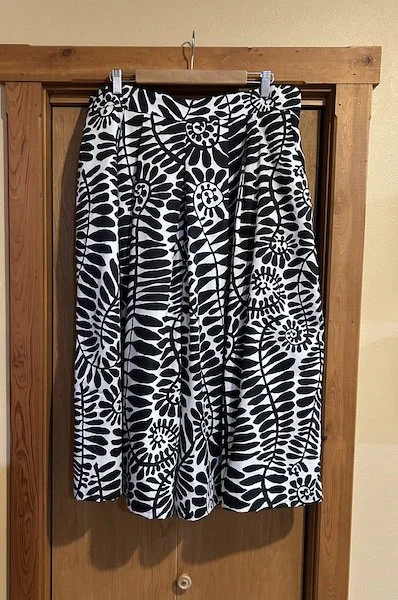
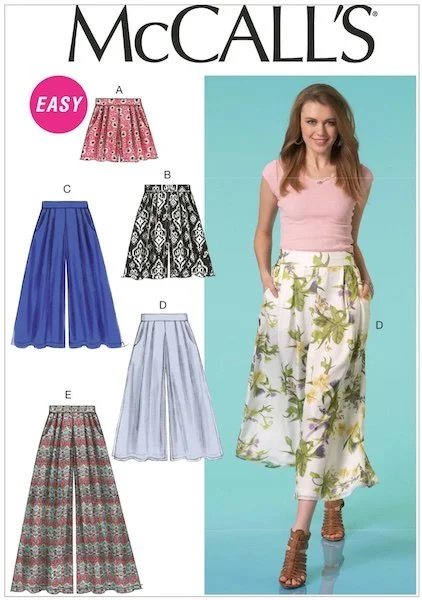
Here are the McCall’s 7131 culottes.

They don’t look like much hanging on the hanger, but I like them a lot. This pattern is going into the tried-and-true pile, with some minor modifications.

I was going to make a muslin out of Walmart remnant fabric, but I didn’t have enough of anything. The width of the legs—about 15" at the hem—makes this a very fabric-intensive pattern. I ended up using a yard and a half of a Kaffe Fassett wideback (108"). When Kaffe and Brandon Mably were at the store last fall, Brandon pulled this bolt off the shelf and told me that he had designed this print for the Collective and thought it would make a great dress. I didn’t make a dress, but I think he’d be happy to know it did end up in a garment.

I love the Kaffe widebacks. They are printed on a cotton sateen substrate and are perfect for garments. I am noticing that more designers, like Tula Pink, are starting to use the same substrate for their widebacks. The Burnside Bibs I made for Sammy were out of a similar cotton sateen. The sateen does like to fray, though, so serging the seams is a must.

I measured the rise on the McCall’s pattern before I started and compared it to the Style Arc Linda pants, which is one of my favorite pants patterns. The lengths were similar, so I thought the McCall’s pattern was going to be okay, and it is—mostly.

Making pants for women’s bodies is hard, which is why most women don’t like to make pants. The measurements don’t tell the whole story. Two women could have the same waist and hip measurements but have entirely different body shapes. One might have a flat butt and one might have a more shapely derrière. The crotch length might be the same, but the shape could be different.

When I tried on the culottes, I noticed that the front pleats were not hanging nicely; the entire front of the pants seemed to be pulling to the back through the crotch. I’ve run into this problem before. Sometimes, the fix is as easy as cutting a wedge off the back crotch hook, flipping it over, and attaching it to the front crotch hook to move the inseam toward the back, which I did on the Free Range Slacks pattern. I did a quick check of my theory by putting the culottes on backwards, and they fit much better.

[I would love to have illustrations to accompany this but my drawing skills are sadly lacking. Handmade PhD has a good explanation of this fix here.]

That adjustment has to be made at the patterning stage, so it wasn’t an option for the finished culottes. Fortunately, these pants have a lot of fabric in them. I ended up sewing a deeper crotch seam—by about half an inch—and that alleviated the problem. And then I went back and changed the crotch shaping of the McCall’s pattern so that it matches that of the Free Range Slacks.

I need to make a simple black cotton top to wear with these culottes.

******

I cleaned up the herb garden yesterday afternoon. Today, I’m going to plant a few things out there that I purchased in Washington state last month, including two white lavender varieties and a bee balm variety I haven’t seen before. I’ve also got to address the weed problem in the gravel around the beds. We put down a heavy weed barrier at the beginning of that project, but we did not get washed rock and we should have. The rock we did get came with enough dirt attached to it that weeds stubbornly pop up in the paths around the beds. I pull them when I can, but last year they got away from me. This year, I want to spray them with a vinegar/salt/Dawn dishwashing detergent mix.

It’s time to plant peas, and I am going to lay out black plastic and weed barrier in the big garden before the weed seeds sprout. If only the vegetables were as tenacious as the weeds. 🫤

Bunnies, Anyone?

The husband came home yesterday and asked me how my day went and I said it was fabulous. I didn’t see anyone or talk to anyone and I made a pair of culottes from the McCall’s 7131 pattern. I know I said I was going to make tops, but I changed my mind. You’ll see the culottes in tomorrow’s post because I need to give them a good final press. In the meantime, we’ll look at other stuff that is happening around here.

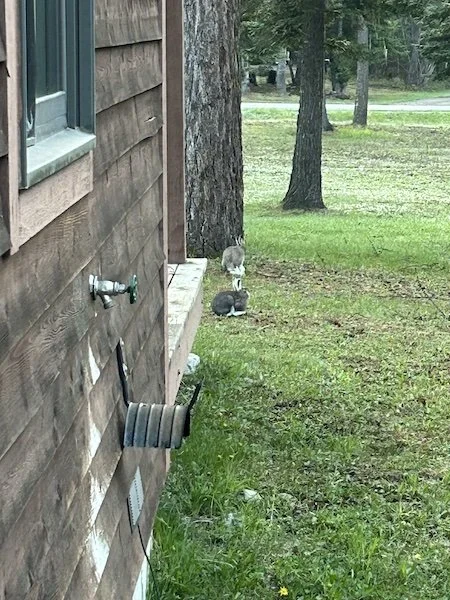
We now have two bunnies!

We used to have two bunnies but one disappeared. Bunny has been alone for over a year. I suspect that soon, we will have Even More Bunnies.

ETA: Right after I posted this blog entry, the husband came in from outside and said, “There are three bunnies out there.”

I did not expect them to muliply that quickly.

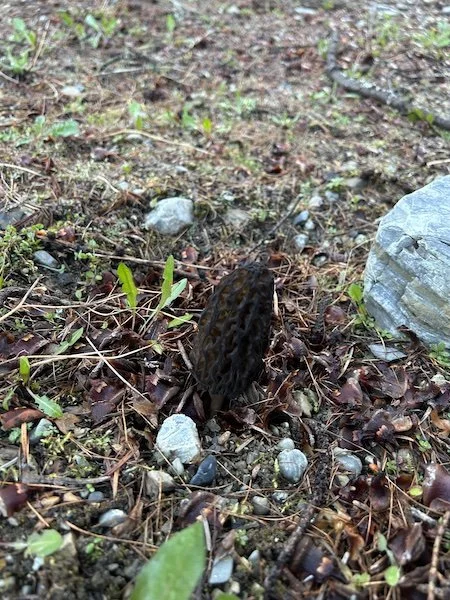
The morels are up, right on schedule:

I need to walk around the property to see if we have other patches.

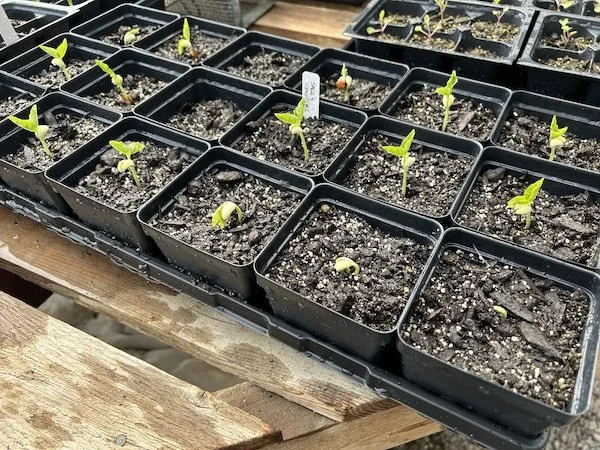
I am trying cowpeas again this year. So far, things look promising:

This is a variety called Sage’s Cowpeas that I got from Triple Divide Seeds. Cowpeas are a southern crop and I have not had good luck with them here in Montana. Triple Divide varieties are selected for our climate so I am optimistic. I am starting all the beans inside and transplanting them once it warms up.

Hopefully, we are done with the 20F overnight temps. The forecast, at least through the first 10 days of May, is for temps in the 60s and 70s and lows in the 40s. Unfortunately, the forecast doesn’t include rain and that’s not good. May and June are our rainy months and if we don’t get rain then, the odds for a bad fire season increase exponentially.

I expect that everything in the greenhouse will take off this week and grow like crazy. I still have not moved Charlotte out there. The husband asked me yesterday if she was going to become a permanent fixture in the kitchen and I said that no, she really needs to go back out into the wild. I don’t mind catching flies for her but they are hard to come by in January and February.

We need to plant potatoes this weekend.

Still No Sewing, But Getting Closer

I was at the dentist’s office at 7:00 am yesterday morning and he saw me right away. The crown that has been on my molar since 2014 had some issues—the bottom edge was chipped and deteriorating—so after some discussion, we decided the best course of action was a new crown. He wanted to do some work around the stump of the tooth and that required anesthetic. After about two hours, I left the office with a new temporary crown and an appointment for later in May to get the new permanent crown affixed.

I came home and edited this week’s podcast episode, had a phone meeting with DD#2 and her wedding coordinator—this is the same gal we had for DD#1’s wedding and she’s wonderful—and finally made it to the sewing room.

[Hiring a wedding coordinator is absolutely worth the money. When DD#1 got married, I wanted to be able to enjoy the day and not have to worry about putting out fires. As it turned out, the pandemic threw a huge wrench into the plans and Sarah was a great help with getting everything sorted, so she was one of the first people we contacted after DD#2 set a date.]

I spent the afternoon cleaning up the sewing room and organizing fabric. I moved the bins of summer fabric where I could reach them more easily and put the bins of sweater knits and wools at the back of the closet. I pulled out the patterns I want to use and located some Walmart remnants for making muslins.

I told the husband the other day that I desperately need an entire day at home (several days would be better) with no interruptions. I am hoping today will be that day. I can work in short bursts of time here and there, but that schedule is not ideal. I much prefer days when I can really dig in and get a lot done, and those days have been in short supply recently.

I am going to start by making some tops as I need those more than anything else. I’ll also knock out some Free Range Slacks and maybe some culottes or wide-leg pants. If I batch sew, I might be able to do two or three tops in a day but probably only one pair of pants.

This is a pattern I got from Ryliss Bod when I was at the Sewing and Design School in November.

It’s in the pile of patterns to make. I need to compare it to the Free Range Slacks to make sure the rise is similar.

******

The plants in the greenhouse are looking good. The garden also looks good now that it is all tilled and ready to go. It is very fragrant because of all the pig and chicken manure. I hope this will be a good gardening year. The husband has done a lot of work out there to streamline things for me and make my job easier. The weather is supposed to clear up and warm up this week. I’m hoping to clean out the strawberry bed and start cleaning up the herb garden.

And the hummingbirds have come back! I saw one at the feeder last night. This seems so late—I think they almost always have been here by the first of April. There are also two robins sitting on eggs in nests in the porch rafters. I will try to get out and get more photos this week because a lot is happening.

The apple trees in the garden are doing very well. Two trees that we planted a couple of years ago have really taken off. One is a Wolf River from Costco and it looks healthy and vigorous. The other is a Spokane Beauty that Susan grafted for the plant sale. I bought it because I liked the name and the description. I think it doubled in size last year. Susan puts all of her grafts on Budagovsky 118 (Bud 118) rootstock and her trees always do very well for me.